The part in your shopping cart either fits or it does not, and the listing rarely tells you which. Three facts decide almost all of it: your make and model, the model year, and whether the cart is already lifted. Most owners buy in roughly the same order: tires and wheels, a lift, a rear seat, then lights, a cover and comfort items.
Golf Cart Upgrades and Accessories: What Fits Your Cart, in the Order Owners Buy Them
On this page (4)
What fits, family by family
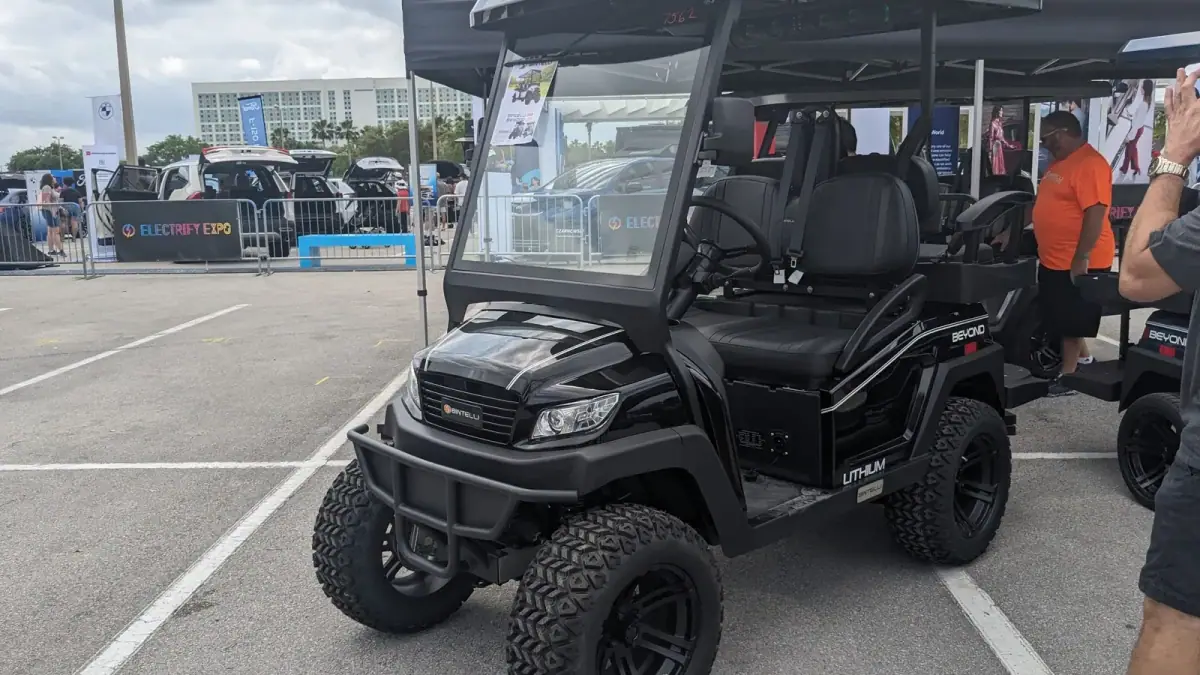
Work from the cart outward. Get the model and year off the serial plate, note whether it is lifted, and read what is on the tire sidewall now before you order anything.
- Tires and wheels: stock sizes differ by model, so check which tire sizes fit without a lift, match the bolt pattern and offset when you buy new wheels, and set the pressure your maker asks for, not the number molded on the sidewall.
- Lift kits: the kit type and height are specific to your cart and drive system.
- Seating: a rear seat kit turns a two seater into a four seater and eats into the load limit; worn cushions take covers or complete seats; or start with a factory six seater.
- Weather: covers and enclosures for storage and rain, plus a clear or tinted windshield.
- Being seen: LED light kits and side or rear view mirrors.
- Comfort: propane or electric heaters and soundbars or installed speakers.
- Hauling: a hitch rated for what your cart can pull.
What a lift changes
A lift is the one upgrade that reshapes the rest of the list. It opens up tire sizes that would rub the body or the fender at stock ride height, which is why the kit comes first and the tires second.
Taller tires also turn more ground per motor revolution, so the cart tends to feel a little quicker at the top end and a little lazier from a stop, and a heavier wheel and tire package asks more of the pack on the same charge. Ride height raises the center of gravity too, so a lifted cart leans more in a turn and wants slower cornering, especially with a rear seat full of passengers.
Tip: The lift decides the tire size, not the other way round. Pick the kit first, then buy only from the tire sizes that kit maker lists for your model and year. Ordering tires first is how people end up with rub marks and a return shipment.
Accessories that go with street use
Lights, mirrors, a windshield and a horn are comfort items on a private property cart and required equipment once you drive on public streets. Which list applies depends on whether your cart stays a golf cart or is registered as a low speed vehicle, and that split comes from the federal motor vehicle safety standards plus your own state and local rules. Buy the equipment after you know which category you are in: a windshield sold as street legal is not the same part as a plain one, and some towns add rules the state does not. Start with where you may drive and who decides.
Yours to install, or a shop's
Most of the catalog is bolt on work for an owner with hand tools: covers and enclosures, windshields, seat covers and cushions, mirrors, a soundbar, a hitch, and wheels and tires if you have a jack and a torque wrench. Light kits and heaters add wiring and a 12 V supply, so they are a weekend job for someone comfortable with a fuse and a relay, and a shop visit for everyone else.
Lift kits and rear seat kits are sold as owner installs but touch suspension and frame mounting points, so read the instructions before buying. Brake work, and controller or motor changes that raise top speed, belong with a technician: they change how the cart stops and may void your warranty.
Tip: Measure before you order a cover. A cart with a rear seat and an extended roof is longer than the same model with two seats, and a cover cut for the short version will not reach the back.
All guides in this section
-
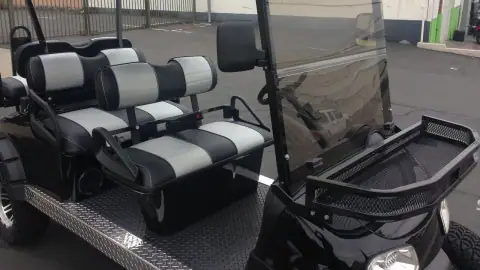 6-Seater Golf Carts: The Factory Models, What They Cost New and How They Drive
Six-seat golf carts from Club Car, E-Z-GO, Kandi, ICON and Evolution: how the third row works, what they cost new, who may ride and how they handle.
-
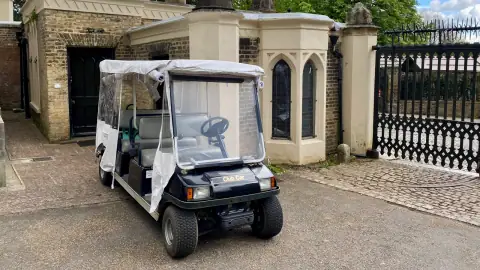 Golf Cart Covers and Enclosures: Storage Covers, Throw-Over Covers and What Fits Your Cart
Storage covers, throw-over covers and soft or hinged-door enclosures compared: what each is for, why fit follows the roof, and what each is rated for.
-
 Golf Cart Heaters: Propane vs Battery-Powered Electric, and What Each One Warms
Propane cup-holder heaters and electric heaters wired to the cart's battery pack compared: what each warms, how long it runs, and the enclosure warning.
-
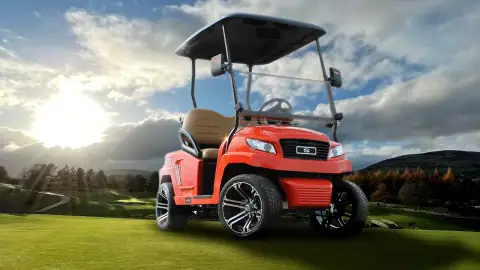 Golf Cart LED Light Kits: What Fits Your Cart and How the Lights Get 12 V
Which LED light kits fit which cart, how a kit gets 12 V from an electric cart's battery pack, and why lights alone do not make a cart street legal.
-
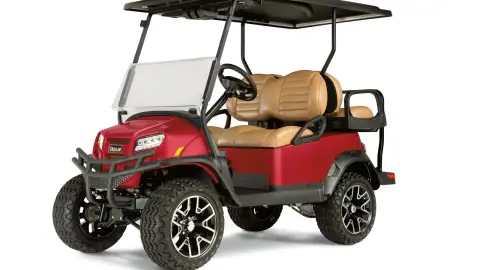 Golf Cart Lift Kits: Kit Types by Cart, Lift Heights and the Tire Each Kit Takes
Spindle, A-arm and drop axle lift kits: which type fits your cart and year, what tire each kit takes, what a lift changes and how to fit one.
-
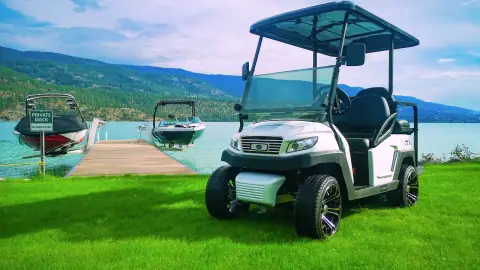 Golf Cart Mirrors: Side or Rear-View, and What the Street Rules Ask For
Which mirrors a golf cart needs on the street under the federal LSV standard and the state rules we checked, and which no-drill and bolt-on mirrors fit.
-
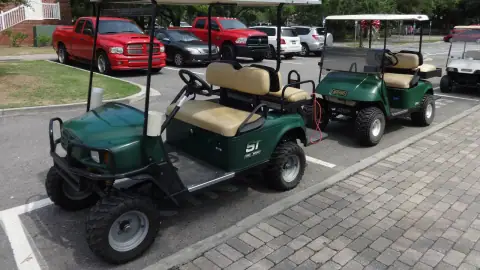 Golf Cart Rear Seat Kits: What Fits Your Cart and What a Back Seat Does to the Load Limit
Which rear seat kits the makers list for Club Car, E-Z-GO and Yamaha carts, how a flip seat goes on, and what a back seat does to weight and capacity.
-
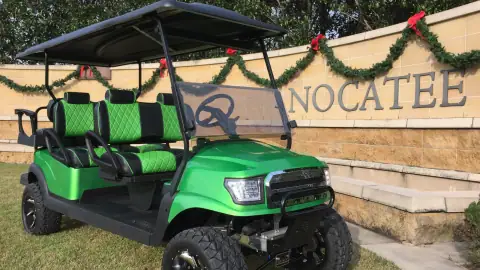 Golf Cart Seat Covers and Replacement Seats: Covers, Cushions, Complete Seats and What Fits Your Cart
Seat covers, replacement cushions and complete seats are three different products. Which fits which cart by model family, how covers go on, and seat care.
-
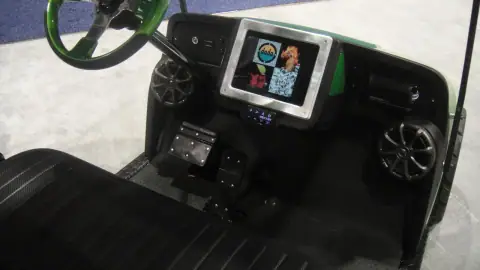 Golf Cart Sound Systems: Soundbars vs Installed Speakers, and How Each Gets 12 V on a 36 V or 48 V Cart
Soundbars, installed speakers and factory stereos compared on the makers' own figures: how each gets its power on a 36 V or 48 V cart, mounting, drain.
-
 Golf Cart Tire Pressure: The Maker's Figure vs the Number on the Sidewall
The tire pressure each cart maker sets for E-Z-GO, Yamaha and Club Car, why the sidewall number is the tire's maximum and not a setting, and how to check.
-
 Golf Cart Tire Sizes Explained: Stock Sizes by Cart and What Fits Without a Lift
The tire sizes golf carts leave the factory on, how to read the numbers on the sidewall, which bigger tires fit a stock cart and which need a lift.
-
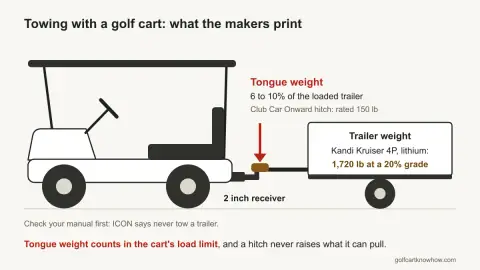 Golf Cart Trailer Hitches: What Your Cart Is Rated to Pull and Which Hitch Fits
Which golf cart makers allow a trailer, what their towing figures really mean, which hitch fits your cart, and what a load does to braking.
-
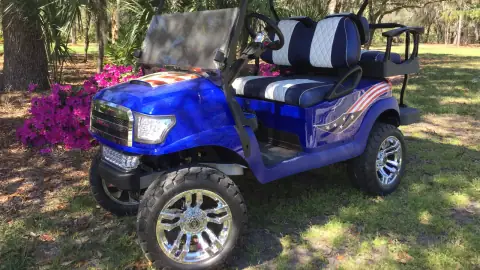 Golf Cart Wheels: Factory Sizes, Bolt Pattern, Offset and Which Sizes Need a Lift
Which wheel size your golf cart has, whether wheels swap between makes, what offset means on a cart, which sizes need a lift and how to fit them safely.
-
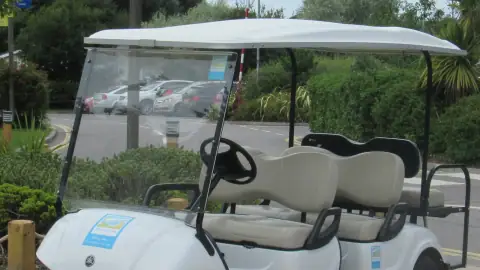 Golf Cart Windshields: What Fits Your Cart, Tinted or Clear, and When You Need a DOT One
Which windshield fits which cart by model and roof strut, fold-down acrylic vs polycarbonate, tinted or clear, when an LSV needs DOT glazing, and care.
-
 How to Make a Golf Cart Faster: Tires, Controller and Motor, and What the Makers Allow
Tires, controllers, speed motors and dealer settings: what each speed upgrade claims to add, what the cart makers warn, and where the federal line sits.