You want to take the cart down to the mailbox, over to the pool, maybe to the store two streets away. What most owners get wrong is assuming that a vehicle sold as a golf cart is allowed on the street. No federal rule makes it legal. Your state and your own town decide, and a faster cart falls under a different rulebook entirely.
Golf Cart Laws: Where You May Drive and Who Decides

On this page (4)
Can I drive it on the road where I live?
Short version: your state writes the frame, and your town or county opens the actual streets.
Federal safety regulators treat a conventional cart that tops out at 20 mph or less as not a motor vehicle at all, which leaves registration, insurance and where you may drive to the states. States then push the street-by-street decision down to local government. In Florida a cart may run only on a county road, a municipal street or a water control district road that the responsible local body has looked at, designated and signed, which makes Florida the worked example worth reading even if you live elsewhere.
Your next step is the narrow one: find out whether your own street is on your city or county list, and look for the signs at the entrance of the road.
Tip: State wording here comes from the statutes as they read in 2026, but local ordinances change far more often. A road your neighbor drove legally five years ago may have been dropped from the list, or added to it.
What it needs to be street legal
Short version: a cart that stays under 20 mph only has to meet your state's short equipment list; a cart that runs 20 to 25 mph becomes a low-speed vehicle and needs a full package.
The faster kind needs the twelve items the federal low-speed vehicle standard lists, from lights and belts to a VIN; a plain golf cart needs none of them federally. What street legal means for your cart depends on which of the two it is.
Speed decides which rulebook you are in
The low-speed vehicle class is a narrow window: four wheels, a speed over a measured mile of more than 20 mph but not more than 25 mph, and a weight rating under 3,000 lb. A cart modified so it can go faster than 20 mph is treated as a motor vehicle, and whoever did the work counts as its manufacturer for certifying it. That is the real difference between bolting on lights and converting the cart properly.
Tip: Speeding up a cart is the step that quietly changes its legal class. Before touching the controller or the motor, settle which class you want it in, because the paperwork and the equipment follow from that one choice.
Do I need a license, insurance or a plate?
Short version: as a low-speed vehicle, expect a license, insurance and registration; as a golf cart, it depends on your state.
In Florida, for example, a cart driven under the golf cart rules needs no plate and an adult can drive it on a photo ID, while a low-speed vehicle there is titled, registered, insured and driven on a license. Check the license and age rules for your state before you hand anyone the key, and the Florida rules if that is where the cart lives.
All guides in this section
-
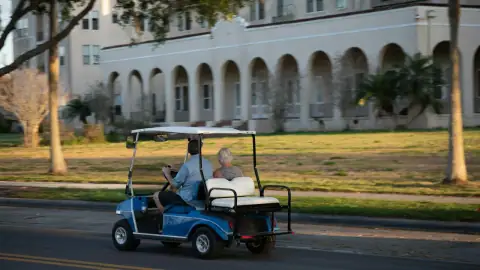 Do You Need a License to Drive a Golf Cart? Age and License Rules in the States That Write Them
Whether you need a driver license to drive a golf cart on the road, the minimum age where a state sets one, and why your town can be stricter.
-
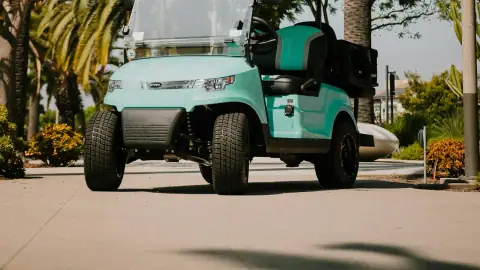 Florida Golf Cart Laws: Where You Can Drive, Who May Drive, and the Rules for LSVs
Florida's golf cart rules in plain words: which roads, the age and license rule since October 2023, driving at night, and how an LSV differs. Checked 2026.
-
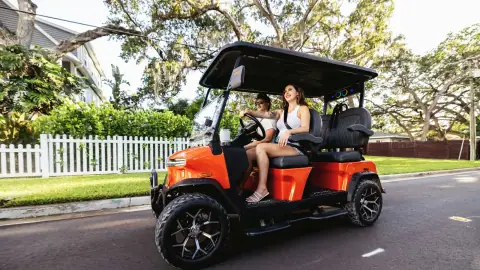 How to Make a Golf Cart Street Legal: Golf Cart or LSV First, Then the Parts and the Paperwork
Decide first whether your cart stays a golf cart or becomes an LSV, then the parts each route needs, the VIN and title question, and your state's part.
-
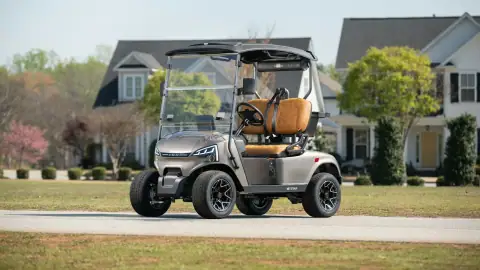 Is a Golf Cart Street Legal? Golf Cart or LSV, and Who Decides Where You Drive
Why a stock golf cart is not street legal, how a golf cart differs from a low-speed vehicle, and why your state and town decide where you may drive.